
Terpenes When Vaporizing: What Really Happens to Aroma and Flavor in a Vaporizer
Terpenes are why the first draw from a freshly filled Vaporizer tastes like citrus, pine, or pepper - and the tenth tastes only of warm air. This article brings together what measurements actually show about these volatile compounds: how much is lost before vaporization, how stable they are in the device, what happens to them at excessive heat, and which claims about their effects can be substantiated.
Contents
1 · What terpenes are and where they are found
Terpenes are a large family of plant hydrocarbons found in citrus peels, conifers, hops, and lavender as well as in hemp. In the hemp plant, they are produced together with cannabinoids in the glandular hairs (trichomes) and stored there in a resin that mainly coats the female flowers.[1] The most abundant include β-myrcene, limonene, α-pinene, ocimene, β-caryophyllene, and α-humulene.[1]
Chemically, two groups make the decisive difference when vaporizing: monoterpenes with ten carbon atoms (such as myrcene, limonene, pinene, and terpinolene) and sesquiterpenes with fifteen (such as β-caryophyllene and α-humulene). The smaller monoterpenes are significantly more volatile - and in fresh material, they make up most of the aroma.
In terms of quantity, terpenes are a minor component. In the classic study by Ross and ElSohly, fresh flower material contained only 0.29 percent essential oil by fresh weight.[2] The fact that this small proportion still determines the flavor is due to the human nose: it responds to some aromatic compounds even at minute concentrations.
One detail missing from many guides: Not every typical smell is a terpene. According to a 2021 analysis, the characteristic »skunky« note comes from a group of sulfur-containing compounds, above all prenylthiol - the same substance that gives beer a »lightstruck« flavor. It occurs only in trace amounts but strongly shapes the smell.[3]
2 · Why terpenes go first
As we explained in detail in the article The right Vaporizer temperature, the boiling point is the wrong model for a Vaporizer: substances enter the gas phase long before their boiling point, and the airflow continuously carries the vapor away. The physically appropriate quantity is vapor pressure - it describes how strongly a substance »pushes« into the air at a given temperature.
Table 1 · Vapor pressure of common terpenes at around 25 °C. The higher the value, the faster the substance evaporates - even without a device.
| Terpene | Group | Vapor pressure | Typical aroma |
|---|---|---|---|
| α-Pinene | Monoterpene | 4.75 mmHg | Pine, resinous |
| β-Myrcene | Monoterpene | 2.09 mmHg | earthy, spicy |
| Limonene | Monoterpene | 1.55 mmHg | Citrus |
| Linalool | Monoterpene alcohol | 0.16 mmHg | Lavender, floral |
Values according to the PubChem datasets of the US health agency NIH, which are based on the CRC Handbook of Chemistry and Physics and the Hazardous Substances Data Bank.[4]
Two things can be inferred from this. First: Even at room temperature, α-Pinene evaporates about thirty times faster than Linalool. Terpenes therefore do not leave the material only in the Vaporizer, but constantly - during drying, in the container, and when grinding. Second: In the device, the most volatile monoterpenes go first. This matches the experience that the first draws from a load taste the most intense and that the flavor becomes flatter toward the end.
3 · The greatest loss occurs before the device
The extent of this silent loss is shown by the study conducted by Ross and ElSohly at the University of Mississippi. They determined the essential oil content in fresh flowers, after one week of air-drying, and after subsequent storage for one and three months.[2]
Essential oil in hemp flowers: fresh, dried, stored
Oil yield as a percentage, based on fresh weight
What was lost is particularly noteworthy. In the fresh oil, monoterpenes accounted for 92.5 percent, but after three months they accounted for only 62 percent. During the same period, the proportion of the heavier sesquiterpenes rose from 6.8 to 35.6 percent.[2] The sesquiterpenes did not increase - they simply disappeared more slowly. Stored material therefore not only smells weaker but also different: less fresh and fruity, more woody and peppery. However, none of the main components had disappeared completely.[2]
In 2020, an Israeli research group systematically investigated the conditions under which the material keeps best. Whole and ground flowers were stored in the dark for one year at 25, 4, −30, and −80 °C.[5] The result is sobering and practical at the same time:
- Terpene concentration declined rapidly under all conditions - by an average of more than half within the first four months.[5]
- Ground material and temperatures below −20 °C performed worst for the terpenes. Deep-freezing is therefore not a good idea.[5]
- Overall, the authors recommend whole flowers at 4 °C, meaning refrigerator temperature, in the dark, as the best condition.[5]
4 · How stable terpenes are in the device
What happens to terpenes when they reach the temperatures at which a Vaporizer operates? In 2022, a Health Canada research group published measurements on this in Scientific Reports. Five pure monoterpenes were heated to 100, 150, and 200 °C and then analyzed to determine what proportion remained unchanged and what conversion products were formed.[6]
How much remains unchanged?
Share of unchanged terpene after heating to 100 to 200 °C, range across all three temperatures
The order is clear: Myrcene proved to be almost insensitive (97–98 percent unchanged), followed by limonene (81–92 percent), α-pinene (60–80 percent), and β-pinene (50–73 percent). Terpinolene, by contrast, remained intact at only 11–28 percent and produced the largest amounts of transformation products.[6] The substances formed were predominantly oxidation products - molecules that had taken up oxygen or given up hydrogen, including fenchol and β-pinone.[6]
In practice, this means that the same temperature does not affect every aroma in the same way. Material whose aroma is strongly characterized by terpinolene (fresh, floral, slightly sweet) is likely to be more sensitive to high temperatures than material that smells primarily of myrcene.
5 · When it gets too hot
The research group led by Robert Strongin at Portland State University investigated what happens to terpenes when they are heated intensely. The reason was so-called »dabbing«, in which concentrates are vaporized on a red-hot surface. Under realistic dabbing conditions, myrcene and other terpenes produced, among other substances, methacrolein and benzene, both of which are substances of health concern.[7]
The key factor is temperature dependence. In the experiments, methacrolein was not detectable at 322 °C and only appeared at 403 °C and above, in increasing amounts as the temperature rose.[8] In a 2025 review, the same group also emphasizes that oxygen plays a central role in the formation of many of these breakdown products.[8]
6 · What terpenes do - and what has not been proven
Tables circulate about terpenes that assign each compound its own effect - myrcene calming, limonene mood-enhancing, pinene promoting concentration. The idea behind the most popular explanatory model, the so-called entourage effect, is that terpenes enhance or alter the effects of cannabinoids.
A laboratory study from New Zealand examined whether the five most common terpenes - myrcene, α- and β-pinene, β-caryophyllene, and limonene - act directly on the cannabinoid receptors CB1 and CB2 or alter the effects of THC there. The result was negative: according to the authors, a possible entourage effect cannot be explained by direct effects at these receptors.[9]
The most interesting human trial on the subject so far was very different. At Johns Hopkins University, 20 healthy adults inhaled vaporized THC, vaporized limonene, both combined, or a placebo in a double-blind study.[10] The combination of 30 mg of THC and 15 mg of limonene significantly reduced ratings of “anxious/nervous” and “paranoid” compared with THC alone. Limonene alone acted like a placebo and also did not change how the body processed the THC.[10]
7 · Practical implications
The measurement data cannot be used to derive a “terpene temperature.” What can be derived are several rules that follow directly from the findings:
- Store whole; grind shortly before use. Ground material loses terpenes more quickly.[5] Every increase in surface area accelerates evaporation, which already occurs at room temperature.
- Dark, airtight, and cool, but not frozen. The best condition in the long-term experiment was whole flowers at 4 °C; deep-freezing performed worst for the terpenes.[5] Airtight storage makes sense because oxygen is involved in many degradation reactions.[8]
- Start low and increase slowly. The most volatile terpenes go first. If you take the first draws at a low temperature and then increase it in stages, you can taste the lighter aromas before they evaporate or transform. You can find what such a temperature ramp looks like in The Right Vaporizer Temperature.
- Do not preheat for too long with a filled chamber. The longer the material remains warm without being drawn on, the more aroma evaporates unused. This is not a measurement, but a direct consequence of vapor pressure.
- Keep the vapor path clean. Residue in the mouthpiece and cooling unit can mask subtle aromas. You can find instructions in Cleaning a Vaporizer.
8 · Where the data ends
An honest technical article must also state what was not measured:
- We are not aware of a peer-reviewed study that systematically measures the terpene content in the vapor of a herb vaporizer against the set temperature. All "terpene temperature charts" go beyond the available data.
- The stability data from section 4 come from pure substances. In resin, terpenes are present as a mixture with cannabinoids, which can alter their behavior.
- The degradation products from section 5 were measured in concentrates and at temperatures well above 300 °C. There are no comparable data for herbs at 180 to 220 °C.
- The storage studies each examined specific strains. How much other strains differ remains unclear.
Frequently asked questions
At what temperature do the terpenes come through?
There is no fixed value. Terpenes evaporate even at room temperature and enter the vaporizer's vapor before the cannabinoids. That is why the first draws at a low temperature are the most aromatic. To date, there is no peer-reviewed measurement comparing terpene yield with device temperature.
Why does my material taste flatter after a while?
Because the volatile monoterpenes disappear first. In the study by Ross and ElSohly, more than half of the essential oil was lost after drying and three months of storage, and the proportion of monoterpenes fell from 92 to 62 percent.
Should I freeze my material?
Probably not for the terpenes. In the one-year storage study, temperatures below −20 °C performed worst for the terpenes. Whole flowers stored at around 4 °C, in the dark and airtight, were the best-tested condition.
Are terpenes in the vapor harmful?
There are no measurements at typical Vaporizer temperatures that indicate a risk. Problematic breakdown products such as methacrolein and benzene have been detected in concentrates and at temperatures well above 300 °C. The main takeaway is therefore: do not push herb Vaporizers to their maximum temperature unnecessarily.
Do terpenes enhance the effects?
This has not been established in general. Laboratory experiments found no direct effect of the most common terpenes on cannabinoid receptors. A single human study showed that vaporized limonene at a high dose reduced anxiety-related effects of THC. This cannot be applied to ordinary flowers.
What does the “skunky” smell mean?
According to a 2021 analysis, it does not come from terpenes, but from sulfur-containing trace compounds such as prenylthiol. The terpenes provide the citrusy, resinous or floral notes.
Devices for aroma-focused temperature control
The article above does not derive device specifications from the studies. The data points to two requirements: a low starting temperature that can be increased in small steps, and a vapor path that is easy to keep clean. These are devices from our range that address exactly these points. There are no measurements of terpene content in the vapor for any of them.
For on the go
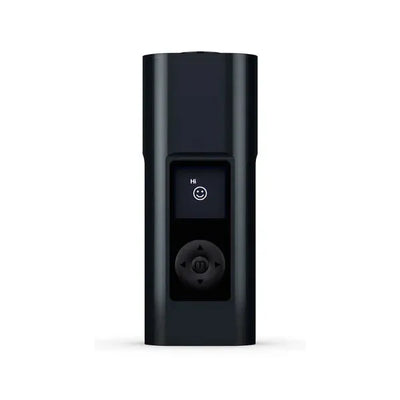
Arizer Solo 3 Version 2.0
Predominantly convection-based, with a glass vapor path and a temperature adjustable from 40 °C in one-degree increments. This makes it possible to start a session at a very low temperature and increase it gradually, as described in section 7.
View Solo 3 →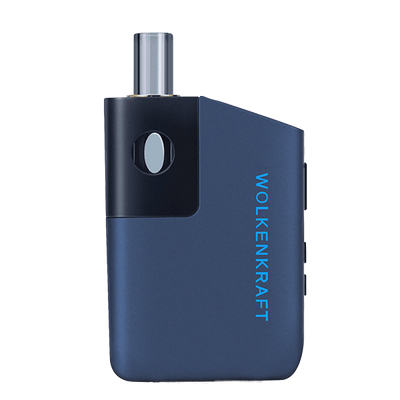
Wolkenkraft FX Mini Ultra
Pure convection with an isolated air path, adjustable precisely from 100 °C. The low lower limit suits a session that begins with the volatile aromas instead of jumping straight into the upper range.
View FX Mini Ultra →For home use
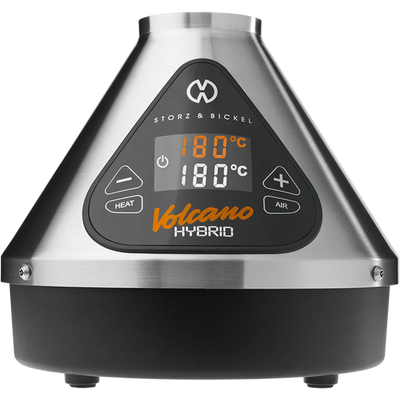
Storz & Bickel Volcano Hybrid
Precise to the degree from 40 to 230 °C, reaching 180 °C in around 40 seconds, with workflows in the web app that can automatically run a temperature ramp. The balloon and whip let you deliberately collect the first, flavor-rich draws.
View Volcano Hybrid →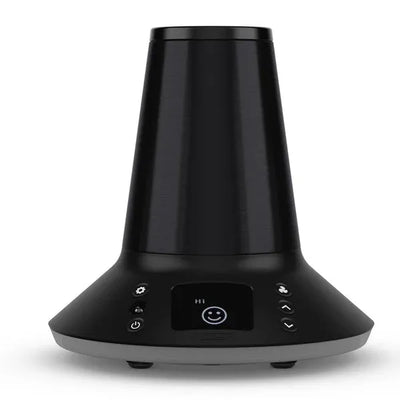
Arizer XQ2
Ceramic convection with a pure glass vapor path, precise to the degree from 50 to 220 °C, plus the Connoisseur Bowl with its own flavor chamber for aroma-focused draws. The glass path can be cleaned completely.
View Arizer XQ2 →Sources
- Booth J. K., Page J. E., Bohlmann J. (2017): Terpene synthases from Cannabis sativa. PLOS ONE 12(3): e0173911. DOI: 10.1371/journal.pone.0173911 - Primary source for terpene formation in glandular trichomes and the major mono- and sesquiterpenes. Freely accessible.
- Ross S. A., ElSohly M. A. (1996): The Volatile Oil Composition of Fresh and Air-Dried Buds of Cannabis sativa. Journal of Natural Products 59(1): 49–51. DOI: 10.1021/np960004a - Primary source for the oil yield (0.29 / 0.20 / 0.16 / 0.13%) and the shift from monoterpenes to sesquiterpenes.
- Oswald I. W. H. et al. (2021): Identification of a New Family of Prenylated Volatile Sulfur Compounds in Cannabis Revealed by Comprehensive Two-Dimensional Gas Chromatography. ACS Omega 6(47): 31667–31676. DOI: 10.1021/acsomega.1c04196 - Primary source identifying prenylthiol as the cause of the "skunky" odor.
- PubChem, National Center for Biotechnology Information (NIH): Substance records for vapor pressure - α-Pinene (CID 6654), β-Myrcene (CID 31253), Limonene (CID 22311), Linalool (CID 6549). The values come from the Hazardous Substances Data Bank (HSDB) and the CRC Handbook of Chemistry and Physics; linalool was measured at 23.5 °C, the others at 25 °C.
- Milay L., Berman P., Shapira A., Guberman O., Meiri D. (2020): Metabolic Profiling of Cannabis Secondary Metabolites for Evaluation of Optimal Postharvest Storage Conditions. Frontiers in Plant Science 11: 583605. DOI: 10.3389/fpls.2020.583605 - Primary source for the one-year storage trial at 25, 4, −30 and −80 °C. Freely accessible.
- Zhu J., Niu J., Das D., Cabecinha A., Abramovici H. (2022): In-situ TD-GCMS measurements of oxidative products of monoterpenes at typical vaping temperatures: implications for inhalation exposure to vaping products. Scientific Reports 12: 11019. DOI: 10.1038/s41598-022-14236-4 – Primary source for the stability of five monoterpenes at 100, 150, and 200 °C. Research group from Health Canada. Freely accessible.
- Meehan-Atrash J., Luo W., Strongin R. M. (2017): Toxicant Formation in Dabbing: The Terpene Story. ACS Omega 2(9): 6112–6117. DOI: 10.1021/acsomega.7b01130 – Primary source for the formation of methacrolein and benzene from terpenes under dabbing conditions.
- Munger K. R., Anreise K. M., Strongin R. M. (2025): Cannabis concentrate vaping chemistry. Frontiers in Toxicology 7: 1568207. DOI: 10.3389/ftox.2025.1568207 – Review article; source for the temperature dependence of methacrolein formation (undetectable at 322 °C, detectable from 403 °C) and the role of oxygen. Refers exclusively to concentrates. Freely accessible.
- Finlay D. B., Sircombe K. J., Nimick M., Jones C., Glass M. (2020): Terpenoids From Cannabis Do Not Mediate an Entourage Effect by Acting at Cannabinoid Receptors. Frontiers in Pharmacology 11: 359. DOI: 10.3389/fphar.2020.00359 – Laboratory study of CB1 and CB2 receptors. Freely accessible.
- Spindle T. R., Zamarripa C. A., Russo E., Pollak L., Bigelow G., Ward A. M., Tompson B., Sempio C., Shokati T., Klawitter J., Christians U., Vandrey R. (2024): Vaporized D-limonene selectively mitigates the acute anxiogenic effects of Δ9-tetrahydrocannabinol in healthy adults who intermittently use cannabis. Drug and Alcohol Dependence 257: 111267. DOI: 10.1016/j.drugalcdep.2024.111267 – Double-blind human trial by Johns Hopkins University with 20 participants.
Note: This article provides technical and scientific information about how vaporizers work and makes no statement about consuming specific substances. The use of vaporizers and handling of the substances mentioned are subject to the applicable legal provisions. All measurement and temperature values come from the cited literature and were determined under laboratory conditions; they are reference values and do not constitute a guarantee for any particular device or material. Statements about the effects of individual terpenes report exclusively the results of the studies cited and are not claims of therapeutic or other effects.


